
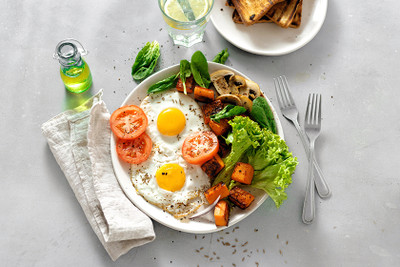
What’s a Healthy Breakfast, Really? Dietitians vs Real Life
E.L. Mont on Jan 12th 2026
Ask five people what a “healthy breakfast” is and you’ll get five different answers.
One person swears by oatmeal. Another says eggs only. Someone else skips breakfast entirely. Social media says smoothies, protein shakes, or fasting until noon. Meanwhile, real life looks like rushed mornings, kids to get out the door, commutes, workouts, and very little time to cook.
So what actually counts as a healthy breakfast — and what matters most when you’re trying to eat better without overthinking it?
Let’s break down what dietitians recommend, where that advice often falls apart, and what a real-world healthy breakfast actually looks like.
What Dietitians Mostly Agree On About Breakfast
Despite the endless debates, there’s more consensus than you might expect. Most nutrition professionals agree on a few core principles.
1. Protein matters more than people think
Protein helps:
-
Keep you full longer
-
Reduce mid-morning cravings
-
Support muscle, metabolism, and steady energy
A breakfast built mostly around refined carbs or sugar tends to wear off fast. Protein gives breakfast staying power.
2. Blood sugar stability beats “low calories”
A very low-calorie breakfast — or one heavy in sugar — often leads to:
-
Energy crashes
-
Hunger returning within 1–2 hours
-
More snacking later in the day
A balanced breakfast that includes protein (and some fat) usually leads to better energy and appetite control.
3. Consistency beats perfection
No one eats a perfectly balanced breakfast every single day. What matters more is choosing options you can realistically repeat.
Where Healthy Breakfast Advice Breaks Down
Here’s the problem: most “ideal” breakfast advice assumes a lifestyle many people don’t have.
-
Time to cook every morning
-
Flexible schedules
-
No kids, no commute, no early meetings
-
High tolerance for meal prep
In real life, breakfast often needs to be:
-
Fast
-
Minimal effort
-
Familiar
-
Portable
That’s where the gap forms between what’s recommended and what’s actually doable.
What a Real-World Healthy Breakfast Looks Like
A healthy breakfast doesn’t need to be complicated. In practice, it usually checks just a few boxes:
A simple, realistic framework
-
Protein-forward (roughly 20g or more)
-
Low added sugar
-
Quick prep (5 minutes or less)
-
Tastes good enough to repeat
If a breakfast option hits those points, it’s doing its job — even if it’s frozen, pre-made, or eaten on the go.
Realistic Healthy Breakfast Examples
Here’s what healthy breakfast actually looks like for most people:
-
Eggs + toast
Great when you have time, less realistic on hectic mornings. -
Greek yogurt + fruit
Works well if you tolerate dairy and choose lower-sugar options. -
Protein waffles with nut butter or fruit
Fast, filling, and easy to keep consistent — especially for busy mornings. -
Smoothies (done right)
Helpful when protein is prioritized and sugar-heavy add-ins are kept in check.
Notice what’s missing? There’s no requirement for everything to be homemade, trendy, or complicated.
Is Skipping Breakfast Actually Healthier?
For some people, skipping breakfast works fine. For others, it backfires.
If you:
-
Feel shaky or irritable mid-morning
-
Overeat later in the day
-
Rely heavily on coffee to get through mornings
…then skipping breakfast probably isn’t helping as much as it seems.
A protein-forward breakfast often improves focus, energy, and appetite regulation — especially for active people or those with long mornings.
How to Tell If Your Breakfast Is Actually Working
Instead of focusing on labels or trends, ask yourself:
-
Am I full for more than an hour or two?
-
Do I crash mid-morning?
-
Am I reaching for snacks immediately after?
-
Can I eat this consistently without effort?
If the answers are mostly positive, your breakfast is probably doing what it’s supposed to do.
The Bottom Line
A healthy breakfast isn’t about chasing the “perfect” option — it’s about choosing something repeatable, protein-forward, and realistic.
If your breakfast:
-
Fits your schedule
-
Keeps you full
-
Doesn’t spike and crash your energy
…then it’s doing its job.
Healthy eating doesn’t start with perfection. It starts with habits you can actually keep.